Industrial solar solutions for Australian businesses
Reduce grid electricity consumption and make better use of your commercial roof space with an industrial solar system designed around your site’s actual energy requirements.
ADS Solar provides tailored commercial solar, commercial battery and solar and battery solutions for warehouses, manufacturing facilities, retail businesses, education, aged care, hospitality, offices, automotive businesses, distribution centres and multi-site organisations.
Solar designed around your business
Commercial solar should be sized using real electricity consumption, operating hours, roof space and electrical infrastructure.
Industrial solar solutions for different business sectors
Every commercial site has a different electricity profile. ADS Solar assesses your energy usage, roof area, operating hours and electrical infrastructure before recommending a system.
Warehouses
Manufacturing
Retail
Education
Aged care
Hospitality
Offices
Automotive
Distribution
Leisure & fitness
Agriculture
Multi-site organisations
 ADS Solar commercial project
Turn your commercial roof into an energy-generating asset
Warehouses, factories, aged-care facilities, retail sites and commercial buildings can have substantial unused roof space that may be suitable for commercial solar.
Businesses operating during daylight hours may be particularly well suited because solar generation can coincide with demand from machinery, lighting, refrigeration, cooling, pumps and office equipment.
ADS Solar designs industrial solar around your property’s actual energy profile rather than simply filling the available roof with the largest possible number of panels.
- Commercial energy consumption analysis
- Roof and site assessment
- Three-phase solar system design
- Commercial inverter configuration
- Network connection assessment
- Battery storage options
- Future EV charging planning
Why install industrial solar?
A well-designed commercial solar installation can become part of a broader long-term business energy strategy.
Reduce grid electricity purchases
Generate electricity during daylight hours and offset part of the electricity your business would otherwise purchase.
Use commercial roof space
Turn suitable warehouse, factory and commercial roof areas into productive renewable-energy assets.
Prepare for future energy needs
Plan for commercial batteries, EV charging and increased electrification.
Support sustainability objectives
Increase the amount of renewable electricity generated directly at your business premises.
Compare commercial and industrial solar system sizes
Explore common commercial system capacities. Final system size should be based on electricity consumption, roof space, operating hours, electrical infrastructure and network requirements.
20kW commercial solar system
Suitable for offices, workshops, retail properties and smaller commercial sites with moderate daytime consumption.
View 20kW solar system → 30kW30kW commercial solar system
Suitable for businesses with consistent daytime electricity usage and appropriate three-phase infrastructure.
View 30kW solar system → 50kW50kW commercial solar system
Suitable for warehouses, schools, automotive businesses, retail facilities and medium industrial sites.
View 50kW solar system → 100kW100kW commercial solar system
A larger option for warehouses, manufacturers, distribution facilities and significant daytime energy users.
View 100kW commercial solar →What size solar system does your business need?
Tell ADS Solar about your property and electricity requirements. A recent commercial electricity bill can help our team assess suitable system capacity.
Industrial solar for different types of businesses
Warehouse solar
Large warehouse roofs can provide substantial solar space for lighting, ventilation, refrigeration, offices and operational loads.
Manufacturing solar
Factories can have significant daytime electricity demand from machinery, motors, compressors, cooling and production equipment.
Retail solar
Retail businesses commonly use electricity during daylight hours for lighting, refrigeration, air conditioning and building services.
Education solar
Schools and educational facilities operate mainly during daylight hours and may have several suitable building roofs.
Aged-care solar
Aged-care facilities may consume substantial electricity through kitchens, laundries, lighting, air conditioning and common areas.
Hospitality solar
Hotels, restaurants and hospitality businesses can have high demand from kitchens, refrigeration, cooling and lighting.
Office solar
Office energy use from cooling, computers, lighting and building services often overlaps with daytime solar generation.
Automotive solar
Workshops and dealerships can use solar to support workshop equipment, compressors, air conditioning, offices and EV charging.
Distribution solar
Distribution centres can combine large roof areas with daytime electricity demand from lighting, conveyors and operational equipment.
Leisure & fitness solar
Gyms, aquatic centres and sporting facilities may use substantial electricity for cooling, pumps, ventilation and lighting.
Agricultural solar
Agricultural businesses may use electricity for irrigation, pumping, refrigeration, processing and ventilation.
Multi-site solar
Multi-site organisations can assess individual locations and develop a staged solar strategy across suitable properties.
See ADS Solar commercial installations
Explore examples of ADS Solar installations across commercial, retail, aged-care and industrial properties.
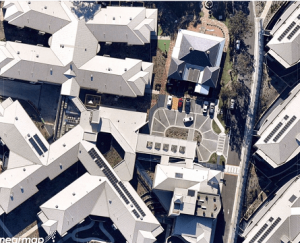
Aged-care solar project
Commercial rooftop solar installation at an aged-care and retirement facility.
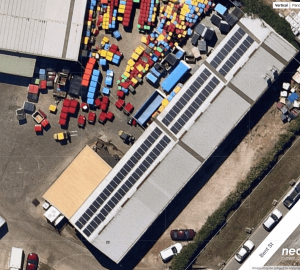
Commercial rooftop solar
Commercial solar installation demonstrating productive use of large rooftop space.
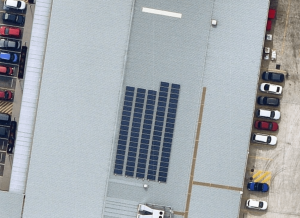
Retail commercial solar
ADS Solar commercial installation at Flower Power in Milperra, NSW.
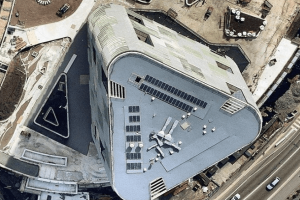
Industrial solar installation
Example of rooftop solar installed on a commercial or industrial property.
Add commercial battery storage to your solar system
Commercial battery storage can be assessed alongside a new industrial solar system or potentially added to a compatible existing solar installation.
The correct battery capacity depends on electricity consumption, solar generation, operating hours, power demand and broader business energy objectives.
Compare solar battery prices , commercial batteries and solar and battery solutions before finalising a storage strategy.
- Store excess daytime solar generation
- Increase on-site solar self-consumption
- Use stored electricity outside peak solar hours
- Support energy-management strategies
- Integrate with suitable commercial EV charging
- Assess backup capability where required
Commercial battery sizing should consider
Battery capacity and power output should be matched to the site’s actual energy profile rather than selected from capacity alone.
- Daytime solar surplus
- Evening and overnight energy demand
- Maximum site power requirements
- Existing inverter configuration
- Backup power requirements
- Future business expansion
How ADS Solar designs an industrial solar system
Commercial and industrial solar requires detailed energy, electrical and site assessment.
Energy analysis
Review electricity bills and interval data to understand when and how your business consumes electricity.
Site assessment
Assess roof area, orientation, shading, roof condition, access and potential panel locations.
System design
Determine appropriate solar capacity, inverter configuration and electrical requirements.
Installation planning
Plan electrical works, network requirements and installation while minimising disruption to operations.
Industrial solar for three-phase properties
Many industrial and commercial facilities operate with three-phase electrical supplies.
The inverter configuration, proposed solar capacity and electrical design should suit the property’s supply and network connection requirements.
- Three-phase inverter solutions
- Commercial switchboard assessment
- Network export requirements
- Load balancing considerations
- Future battery integration
- Monitoring options
Why interval electricity data matters
A normal electricity bill shows total consumption, while interval data provides more detail about when the business uses electricity.
- Daytime electricity demand
- Peak consumption periods
- Overnight base load
- Potential solar self-consumption
- Possible excess solar generation
- Potential battery-storage opportunity
Industrial solar rebates and incentives in Australia
Eligible business solar installations may receive renewable-energy certificate support depending on system capacity and project configuration.
Smaller commercial solar systems
Eligible smaller-scale commercial installations may qualify for Small-scale Technology Certificates, commonly known as STCs.
Where applicable, certificate value may be reflected within the solar quotation.
Larger industrial projects
Larger installations can have different renewable-energy certificate, metering, engineering and network requirements.
The appropriate project structure should therefore be assessed individually.
How much does industrial solar cost?
Industrial solar does not have one fixed installed price because commercial projects vary significantly in capacity and installation complexity.
- Solar system capacity
- Solar panel specification
- Commercial inverter configuration
- Roof type and condition
- Building height and access
- Electrical infrastructure
- Switchboard upgrades
- Network connection requirements
- Engineering requirements
- Battery storage
- Monitoring systems
For common commercial capacities, compare our 20kW solar system prices, 30kW solar system prices, 50kW solar system prices and 100kW commercial solar cost.
Have these business details ready
- Recent electricity bill
- Business address
- Typical operating hours
- Approximate roof area
- Future expansion plans
- Battery requirements
- EV charging plans
Is industrial solar worth it for your business?
Businesses with significant daytime electricity consumption and suitable roof space can be strong candidates for commercial solar.
- Annual electricity consumption
- Daytime load profile
- Solar self-consumption
- Electricity tariffs
- System investment
- Available incentives
- Roof suitability
- Expected occupancy period
Solar self-consumption matters
For many businesses, electricity consumed directly while the solar system is generating is an important part of project economics.
Installing the maximum possible number of panels is not automatically the best approach for every commercial site.
System capacity should be designed around actual consumption, tariffs, network constraints and future business requirements.
Industrial solar installation across Australia
ADS Solar provides commercial and industrial solar solutions across major Australian markets. Contact us to discuss project availability for your business location.
Commercial solar, industrial systems and battery storage
Explore commercial solar system capacities, battery storage, completed projects and other ADS Solar energy solutions.
Industrial solar designed around your facility
Commercial solar requires more than choosing solar panels and filling available roof space.
ADS Solar assesses the site’s electricity profile and infrastructure before recommending an industrial solar solution.
- Business electricity consumption
- Daytime load profile
- Commercial roof space
- Solar system capacity
- Commercial inverter configuration
- Electrical infrastructure
- Battery requirements
- Future EV charging
- Network requirements
- Monitoring requirements
- Future energy expansion
Single facility or multi-site organisation?
ADS Solar can assess individual locations and help organisations identify suitable sites for a staged commercial solar strategy.
Sites can be considered according to electricity use, available roof area, infrastructure and operational needs.
Find the right industrial solar system for your business
From 20kW and 30kW commercial systems to 50kW, 100kW and larger industrial installations, ADS Solar can assess your energy consumption, roof area and site requirements.
Industrial solar FAQs
What size solar system does my warehouse need?
The appropriate warehouse solar capacity depends on electricity consumption, daytime demand, available roof area, electrical infrastructure, network requirements and business objectives.
Can factories install industrial solar panels?
Yes. Manufacturing facilities can be suitable for industrial solar, particularly where production equipment creates significant daytime electricity demand.
Can commercial solar include battery storage?
Yes. Commercial battery storage can be designed with a new industrial solar system or potentially added to a compatible existing system. Compare commercial batteries and solar battery prices for more information.
Is a 20kW solar system suitable for a business?
A 20kW system may suit smaller commercial properties, workshops, offices or retail sites. Suitability depends on electricity consumption, roof area and electrical infrastructure. Read the 20kW solar system price guide.
What businesses may suit a 50kW commercial solar system?
A 50kW system may suit warehouses, schools, automotive businesses, retail facilities and other medium commercial sites with sufficient daytime electricity demand. See our 50kW solar system guide.
Who should consider a 100kW solar system?
A 100kW commercial solar system may suit larger warehouses, manufacturing facilities, distribution centres and businesses with substantial daytime electricity consumption. See our 100kW commercial solar guide.
Can industrial solar power manufacturing machinery?
Electricity generated by the solar system contributes to the facility’s electrical demand. The amount supplied by solar depends on system output and business consumption.
Do industrial solar systems require three-phase power?
Many larger commercial systems use three-phase electrical infrastructure. The correct configuration depends on the property, proposed system capacity and network requirements.
How much does industrial solar cost?
How much does a commercial solar battery cost?
Commercial battery pricing depends on usable storage capacity, power output, inverter compatibility, backup requirements, installation conditions and the required energy-management functions. Visit our solar battery prices page and commercial battery page to compare options.
Can ADS Solar install solar across multiple business sites?
Multi-site organisations can assess locations individually and develop a staged solar strategy based on electricity consumption, roof suitability and operational requirements.
Request your industrial solar quote
Whether you operate a warehouse, manufacturing facility, retail business, school, aged-care centre, office or multiple sites, ADS Solar can assess your requirements and prepare a tailored solution.
Learn more about commercial solar , compare solar battery prices , explore commercial batteries or browse the ADS Solar project gallery .