
Solar for retail stores
Reduce daytime grid electricity use with professionally designed solar panels for retail stores, shops, supermarkets and shopping centres. ADS Solar designs commercial solar , battery storage and energy solutions around trading hours, roof space, electricity demand and future retail energy requirements.
Solar designed around your trading profile
Retail businesses can use electricity throughout the day for lighting, air conditioning, refrigeration, displays, point-of-sale equipment, offices, kitchens and other operational loads.
Reviewing electricity bills and interval data helps determine the solar capacity that best matches actual daytime demand.
Why solar panels can work well for retail stores
Retail businesses commonly operate during daylight hours, which can create a useful overlap between electricity consumption and solar production. A carefully designed system can generate electricity on-site while the store is actively trading.
Reduce daytime grid purchases
Retail solar panels can generate electricity during trading hours and reduce the amount of electricity purchased from the grid when solar production overlaps with demand.
Use available roof space
Standalone shops, large retail buildings and shopping centres can have substantial roof areas that may be suitable for commercial solar panels.
Improve energy visibility
Commercial monitoring can help retailers understand solar production and how electricity consumption changes throughout the trading day.
Plan for future energy loads
Retail solar design can consider future commercial battery storage , EV charging , refrigeration upgrades and business expansion.
Compare battery prices →Retail solar solutions for different types of businesses
The right solar system varies significantly between a small shop, a supermarket, a large-format retail outlet and a multi-store shopping centre.
Solar panels for shops
Independent shops, showrooms, service businesses and local retail properties can use commercial solar to help offset daytime electricity consumption.
Solar for supermarkets
Supermarkets can have substantial daytime and evening electricity demand from refrigeration, lighting, HVAC, food preparation and other equipment.
Solar for shopping centres
Shopping centres can combine large rooftop areas with substantial common-area and tenant-related energy demand, making site-specific solar analysis particularly important.
Large-format retail
Furniture, hardware, home-improvement, garden and other large-format retail stores may have significant roof space available for solar arrays.
Retail warehouses
Retail warehouse environments can combine lighting, HVAC, offices, inventory operations and customer-facing spaces under large roof areas.
Explore industrial solar →Multi-site retail groups
Businesses operating multiple stores can assess solar across a portfolio and prioritise locations with suitable roofs and stronger daytime energy loads.
Commercial solar panels for shops and retail businesses
The best solar capacity for a shop depends on how much electricity the business uses, when electricity is consumed and how much suitable installation space is available.
A retail business should not select a solar system based only on roof size. The objective is to align solar production with the site’s actual electricity profile.
- Opening and closing hours
- Weekday and weekend trading
- Air-conditioning demand
- Lighting and display loads
- Refrigeration requirements
- Kitchen or food-service equipment
- Available rooftop area
- Network export limits
- Future EV charging
- Battery storage objectives
Why daytime solar use matters
Electricity generated and consumed directly within the retail property can offset grid electricity purchases.
A system that produces significantly more electricity than the store can use during trading hours may rely more heavily on exports unless other loads or battery storage can use the surplus energy.
Solar for shopping centres and large retail properties
Shopping centres can present strong commercial solar opportunities because they often combine substantial roof area with long operating hours and significant daytime electricity consumption.
Common-area loads
Lighting, air conditioning, lifts, escalators, security and building services can create substantial common-area electricity consumption.
Large rooftop areas
Shopping-centre roofs may provide significant installation space, subject to structural suitability, obstructions and access requirements.
Tenant considerations
Metering arrangements, landlord electricity loads and tenant supplies should be understood before finalising the commercial solar design.
Carpark opportunities
Depending on the site, solar can also be considered alongside future carpark structures, commercial EV charging and broader energy upgrades.
Solar panels for supermarkets and grocery stores
Supermarkets can be high-energy retail environments because refrigeration, freezers, HVAC, lighting, bakery equipment and other loads may operate for extended hours.
Commercial solar can help offset part of this daytime electricity demand, while commercial battery storage may be assessed for suitable sites where there is surplus generation or a demand-management opportunity.
- Refrigeration and freezer loads
- HVAC and ventilation
- Lighting
- Bakery and food-preparation equipment
- Long trading hours
- Cold-room energy demand
- Loading and back-of-house facilities
- Future electrification
Use interval data before choosing system capacity
Supermarket electricity profiles can differ significantly from standard retail stores because refrigeration can operate continuously.
Interval electricity data helps identify daytime baseload, peak demand, overnight consumption and opportunities for solar and commercial battery storage.
What size solar system does a retail store need?
Retail solar capacity should be determined from electricity use, available installation area, export limits, trading hours and future loads.
| System size | Possible retail application | Design focus | Learn more |
|---|---|---|---|
| 20kW solar | Smaller shops, offices, showrooms and local commercial premises | Reduce daytime grid consumption | View 20kW solar |
| 30kW solar | Larger shops, retail outlets and smaller commercial properties | Higher on-site daytime generation | View 30kW solar |
| 50kW solar | Large-format retail, supermarkets and larger commercial premises | Match substantial operating loads | View 50kW solar |
| 100kW solar | Shopping centres, large supermarkets and substantial retail facilities | High-capacity commercial generation | View 100kW solar |
| 100kW+ | Large shopping centres and multi-building retail facilities | Custom commercial or industrial engineering | Explore industrial solar |
Commercial battery storage for retail businesses
A commercial battery can complement retail solar where there is a clear technical and financial reason to store or strategically use energy. Battery suitability should be determined from actual load and solar data.
Compare solar battery prices , commercial batteries and solar and battery solutions before selecting storage capacity.
Store surplus solar
Suitable excess solar generated during the day can be stored for use later when solar production falls.
Support evening trading
Retail stores that continue operating into the evening may be able to use stored solar energy after rooftop production reduces.
Manage selected peaks
Commercial batteries may support peak-demand strategies where the electricity tariff and site load profile make this useful.
Selected backup loads
Where specifically engineered, battery systems may support selected critical retail loads during an outage.
Combine retail solar panels with battery storage
A solar-and-battery system can provide retailers with greater control over when suitable solar energy is used.
The system should be designed as an integrated energy solution rather than choosing solar capacity and battery size independently.
- Review daytime solar generation
- Measure evening electricity use
- Assess peak-demand periods
- Review electricity tariffs
- Identify critical loads
- Consider future EV charging
- Plan for store expansion
Do not size a retail battery from solar capacity alone
Two stores with identical solar systems can require very different battery capacities if one closes early and exports significant solar while another trades late and consumes most of its solar generation.
Battery sizing should consider solar exports, electricity consumption, trading hours, tariffs and the objective of the battery investment.
Explore solar battery technologies
The appropriate storage platform depends on energy capacity, electrical architecture, scalability and project requirements. Compare multiple options on the ADS Solar battery price guide .
Tesla Powerwall 3
Explore Tesla Powerwall 3 features and solar battery options for suitable projects.
View Tesla Powerwall 3 →Sigenergy
Explore Sigenergy battery storage and integrated energy-management technology.
View Sigenergy battery →Anker SOLIX X1
Explore modular Anker SOLIX X1 solar battery storage solutions.
View Anker SOLIX X1 →Sungrow battery
Explore Sungrow solar battery configurations and storage technology.
View Sungrow battery →Alpha ESS
Explore Alpha ESS battery storage options for suitable energy applications.
View Alpha ESS →SAJ solar battery
Explore SAJ battery pricing and available solar battery configurations.
View SAJ battery →Solar and EV charging for retail properties
Retail properties and shopping centres can also consider solar alongside EV charging infrastructure for customers, staff or business vehicles.
Customer charging
Suitable retail carparks may incorporate EV charging as part of a broader customer and energy strategy.
Staff and fleet charging
Retail businesses with staff vehicles, delivery vans or service fleets can plan charging infrastructure around site electrical capacity.
Solar-aware charging
Where appropriate, charging schedules and load-management systems can help coordinate EV demand with solar generation and site capacity.
Solar for retail stores across major Australian cities
ADS Solar supports commercial energy projects across Sydney, Melbourne, Brisbane, Adelaide, Canberra and surrounding regions. Retail system design should account for each property’s local conditions, electricity profile and network requirements.
Solar for retail stores Sydney
Sydney retailers can consider commercial solar for shops, supermarkets, shopping centres, showrooms, retail warehouses and multi-site operations throughout metropolitan NSW.
Solar for retail stores Melbourne
Melbourne retail businesses can use rooftop solar to support daytime energy requirements across standalone stores, shopping properties, supermarkets and larger retail facilities.
Solar for retail stores Brisbane
Brisbane’s retail and commercial properties can assess solar systems based on roof capacity, operating hours and daytime electricity demand.
Solar for retail stores Adelaide
Adelaide shops, supermarkets and retail properties can assess commercial solar and battery solutions around site-specific energy consumption.
Solar for retail stores Canberra
Canberra retailers can assess commercial solar, battery storage and EV charging as part of a broader business-energy strategy.
Multi-state retail portfolios
Retail groups operating in multiple Australian states can assess solar across different properties and prioritise sites with suitable energy loads and installation conditions.
Use interval data to design commercial solar for retail
Electricity bills show how much energy a store purchases, but interval data can show when the electricity is being consumed throughout the day.
This can help identify whether solar generation is likely to align with the site’s load and whether battery storage may be useful.
- Half-hourly electricity use
- Opening and closing times
- Peak-demand periods
- Weekend trading
- Seasonal electricity changes
- HVAC consumption
- Refrigeration loads
- Solar export potential
Do not base retail solar solely on roof area
A large retail roof may physically accommodate a substantial solar system, but the most suitable capacity depends on how much electricity the site can use and any limitations on exporting surplus solar.
A commercial assessment helps balance available roof space with actual energy demand.
ADS Solar commercial project experience
Explore examples of commercial solar installations across retail, business and community environments.
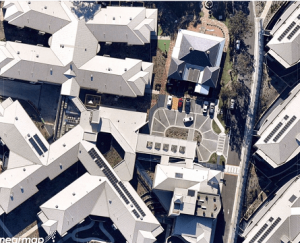
Blue Haven Bonaira
Commercial rooftop solar demonstrating the use of larger roof areas for on-site electricity generation.
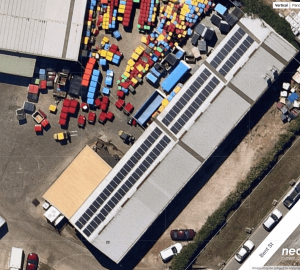
Bent Street, St Marys
Commercial rooftop solar designed around available installation area and daytime business electricity demand.
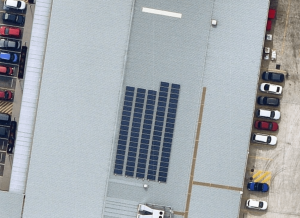
Flower Power, Milperra
A relevant retail solar project showing commercial rooftop solar supporting daytime business operations.
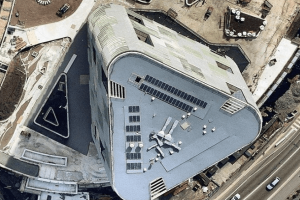
Commercial rooftop installation
Professional commercial solar planned around property conditions and operating energy requirements.
Request a retail solar quote
Tell ADS Solar about your store, shopping centre, supermarket or retail portfolio. Providing recent electricity bills and interval data can help us assess suitable commercial solar and battery options.
What should be assessed before installing retail solar panels?
A professional commercial solar design should consider the property, electrical infrastructure, operating profile and long-term business plans.
Roof condition
Roof age, structure, materials, orientation, shading and maintenance requirements should be reviewed before installation.
Electrical infrastructure
Switchboards, metering, protection systems, cable routes and connection capacity may affect system design.
Business operations
Installation planning should consider trading hours, customer access, staff activity and any required electrical shutdowns.
Future requirements
Battery storage , refrigeration upgrades, EV charging and business expansion can be considered during the initial system design.
Retail solar designed around business performance
Commercial solar should support the way your retail business actually operates rather than being treated as a standard residential-style package.
Established experience
ADS Solar supports commercial energy projects across a range of Australian business and property environments.
Site-specific design
System recommendations can consider electricity use, roof conditions, network requirements and operating objectives.
Solar + battery capability
Retail solar can be assessed alongside commercial battery storage where the site’s energy profile supports it.
Compare solar battery prices →Future energy planning
Solar, batteries and EV charging can be considered together as part of a longer-term commercial energy strategy.
Commercial energy solutions for retail businesses
Explore commercial and industrial solar, battery storage, EV charging and common commercial system capacities before requesting a site-specific proposal.
ADS Solar
Explore residential, commercial, industrial and battery solutions.
Visit ADS Solar →Commercial solar
Explore solar systems designed for Australian businesses and commercial properties.
Explore commercial solar →Industrial solar
Explore higher-capacity solar systems for larger commercial and industrial sites.
Explore industrial solar →Commercial batteries
Explore battery storage solutions for businesses and commercial properties.
Explore commercial batteries →Solar battery prices
Compare battery capacities, brands and indicative solar battery prices.
Solar battery prices →Solar + battery
Explore integrated solar generation and battery-storage solutions.
Explore solar + battery →EV charging
Explore home, commercial and business EV charging solutions.
Explore EV charging →Project gallery
Explore ADS Solar commercial and larger business installations.
View projects →Request a quote
Tell ADS Solar about your retail property and commercial energy requirements.
Request a quote →Contact ADS Solar
Speak with ADS Solar about a commercial solar, battery or EV project.
Contact ADS Solar →Compare retail and commercial solar system capacities
The right system size depends on actual electricity demand, trading hours, roof space, export limits and future business requirements.
20kW solar system
Explore smaller commercial solar pricing and applications.
20kW solar →30kW solar system
Compare 30kW commercial solar pricing and output.
30kW solar →50kW solar system
Explore solar for supermarkets, large-format retail and bigger commercial properties.
50kW solar →100kW commercial solar
Explore higher-capacity solar for shopping centres, large supermarkets and substantial retail facilities.
100kW solar →Turn your retail property into a productive energy asset
ADS Solar can assess electricity usage, roof space, commercial solar capacity, battery storage and EV charging requirements for individual retail stores, supermarkets, shopping centres and multi-site portfolios. If storage is part of the project, compare our solar battery prices .
Frequently asked questions about solar for retail stores
Are solar panels suitable for retail stores?
They can be. Retail stores often operate during daylight hours, which can create a useful overlap between solar generation and electricity demand. Suitability depends on energy use, roof space, electrical infrastructure and network requirements.
What size solar system does a retail store need?
Can shops install commercial solar panels?
Yes, subject to property ownership or landlord approval, suitable roof conditions, electrical capacity and relevant network requirements.
Is solar suitable for shopping centres?
Shopping centres can be good candidates for commercial solar because they may have large roof areas and substantial daytime electricity demand. Metering arrangements, landlord loads, tenants and network requirements should be assessed before system design.
Can supermarkets use solar panels?
Yes. Supermarkets can have substantial electricity loads from refrigeration, freezers, HVAC, lighting and food-preparation equipment. Solar can help offset suitable daytime consumption where the site supports installation.
Can I add a commercial battery to retail solar?
Yes, where technically and financially suitable. Battery sizing should consider solar exports, evening electricity demand, peak-demand periods, tariffs and any backup requirements. Explore commercial battery storage or compare solar battery prices .
How much does a solar battery cost for a retail business?
Battery cost depends on usable capacity, power output, inverter compatibility, installation requirements, backup functionality and the site’s electricity profile. Visit the solar battery prices page for a broader comparison.
Can retail solar work with EV charging?
Yes. Retail sites with suitable electrical capacity and parking facilities can consider solar alongside EV charging . Load management may be required where multiple chargers are installed.
Can ADS Solar design solar for multiple retail stores?
Multi-site retail businesses can assess properties individually and develop a broader rollout strategy based on electricity demand, roof suitability and project priorities.
Does ADS Solar provide solar for retail stores in Sydney?
ADS Solar supports commercial solar projects across Sydney and surrounding NSW areas, subject to site and project requirements.
Does ADS Solar provide retail solar in Melbourne, Brisbane, Adelaide and Canberra?
ADS Solar supports commercial energy projects across Melbourne, Brisbane, Adelaide, Canberra and surrounding regions, subject to individual project requirements and site assessment.
Where can I see ADS Solar commercial projects?
Visit the ADS Solar project gallery to explore examples of commercial solar installations, including retail and larger business environments.