
Commercial batteries for Australian businesses
ADS Solar designs commercial battery storage for businesses that want to store solar energy, manage peak demand, improve energy flexibility and support selected backup requirements. Systems can be designed alongside new commercial solar or assessed for suitable existing solar installations.
What is a commercial battery?
A commercial battery stores electricity for later use at a business site. When paired with solar, it can capture suitable excess generation and discharge when the business needs energy. A well-designed system may also help manage peak demand, tariff exposure and selected backup loads.
Store excess solar
Capture suitable surplus generation from a commercial solar system for later use.
Manage peak demand
A battery may discharge during selected high-demand periods when configured for demand management.
Shift energy use
Stored electricity can be used at a different time, subject to system settings, tariffs and available charge.
Support resilience
Compatible systems can be designed for selected backup requirements where the site and equipment support them.
How to size a commercial battery
Commercial battery sizing should not start with a generic kWh package. The system should be matched to the site’s actual electricity profile and business objective.
Interval load data
Half-hourly or interval consumption data shows when the business uses electricity and when peak demand occurs.
Solar generation
Existing or proposed solar output helps estimate how much surplus energy may be available to charge the battery.
Operating hours
A daytime business has a different storage opportunity from a site with evening, overnight or seven-day operations.
Demand charges
Where applicable, demand tariffs can affect the value of using storage to manage short periods of high power demand.
Backup loads
Critical circuits, required backup duration and load power determine whether resilience should form part of the design.
Future expansion
EV charging, new machinery, electrification or site growth can change future storage requirements.
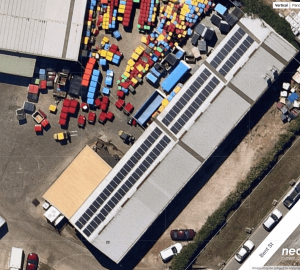
Commercial solar and battery storage work best as one energy strategy
A battery does not create electricity. It changes when stored electricity is available for use. For many businesses, that means solar generation and battery storage should be analysed together.
A site with strong daytime demand may consume much of its solar generation directly. Another site may have surplus daytime solar that can be stored for evening operations. The right design depends on the load profile.
Match battery storage with the right commercial solar capacity
ADS Solar provides commercial solar solutions across a range of system sizes. These pages can help businesses compare solar capacity before a battery is modelled.
20kW solar system
Explore pricing and applications for smaller commercial sites and high-use properties.
View 20kW solar →30kW solar system
Compare 30kW solar for businesses with larger daytime electricity requirements.
View 30kW solar →50kW solar system
Explore 50kW commercial solar pricing and system design considerations.
View 50kW solar →100kW commercial solar
Learn about larger commercial solar costs for warehouses, factories and business facilities.
View 100kW solar →Request a commercial battery quote
Tell ADS Solar about your business, electricity use, existing solar and storage goals. For accurate commercial sizing, interval electricity data may also be useful.
Where commercial batteries can add value
The commercial case for storage varies by site. The strongest opportunities usually come from matching battery operation to a clear energy or resilience objective.
Peak-demand management
Where demand charges apply, a correctly modelled battery may help manage selected demand peaks. Savings depend on tariff structure and load behaviour.
Solar self-consumption
Businesses with surplus solar can store suitable energy for use when solar production is lower.
Time-of-use management
Storage may shift electricity use between tariff periods when the system and energy plan make this practical.
Critical-load backup
Selected loads may be supported during an outage when backup is specifically engineered into a compatible system.
EV charging
Battery storage can form part of a wider energy strategy for sites adding commercial EV charging infrastructure.
Site electrification
Businesses replacing gas equipment or adding electrical machinery can plan storage alongside future demand.
Can commercial batteries reduce peak demand?
Potentially. A battery can be programmed to discharge when site demand approaches a defined level. This is often called peak shaving.
However, the result depends on the tariff, battery power rating, usable capacity, duration of demand peaks and how reliably those peaks can be predicted. A business should model interval data before relying on estimated demand savings.
For this reason, ADS Solar recommends analysing the site’s load profile before choosing commercial battery capacity.

Commercial battery options from ADS Solar
The appropriate product depends on required capacity, power, phase configuration, solar compatibility, backup needs and the scale of the project. Some products below are commonly associated with residential or smaller commercial applications, so suitability must be confirmed for each business site.
Tesla Powerwall 3
Explore integrated battery storage for suitable smaller business and multi-unit applications where system requirements align.
Explore Tesla →Sigenergy
Explore modular energy storage and intelligent energy-management configurations.
Explore Sigenergy →Anker SOLIX X1
Compare modular storage options for compatible applications and scalable energy requirements.
Explore Anker SOLIX →Sungrow
Explore battery and inverter integration across suitable Sungrow energy systems.
Explore Sungrow →AlphaESS
Compare energy storage configurations for suitable business and property applications.
Explore AlphaESS →SAJ battery
Explore SAJ storage pricing and system options for suitable applications.
Explore SAJ →Commercial battery storage for larger energy users
Warehouses, manufacturing facilities and industrial sites can have more complex load profiles than smaller businesses. Their storage projects may require detailed engineering, switchboard assessment, protection design and network considerations.
How to assess commercial battery payback
A useful business case should use measured data and realistic assumptions. Avoid choosing a battery based only on a headline capacity or estimated saving.
| Input | Why it matters | What to analyse |
|---|---|---|
| Interval consumption | Shows when electricity is used. | Daytime, evening, overnight and weekend demand. |
| Peak demand | May affect network or retail demand charges. | Peak kW, duration, frequency and timing. |
| Solar exports | Shows potential surplus energy available for storage. | Export volume and timing across seasons. |
| Tariffs | Energy value changes across different pricing structures. | Usage rates, demand charges, export rates and time-of-use periods. |
| Battery operation | Control strategy affects financial outcomes. | Solar charging, peak shaving, load shifting and reserve levels. |
| Project cost | Installed cost determines investment economics. | Battery, inverter, switchboard, engineering, installation and eligible incentives. |
From energy data to commercial battery installation
A commercial battery project should move from analysis to engineering rather than starting with a pre-selected product.
Review energy data
Analyse bills, interval data, demand and solar generation where available.
Inspect the site
Review electrical infrastructure, switchboards, space, access and existing solar equipment.
Model the system
Compare battery capacity, power, operating strategy and expected business case.
Install and commission
Complete approved installation, protection, commissioning and monitoring configuration.
Solar experience across Australian business sites
Commercial energy projects vary by building type, electricity demand and operating profile. These ADS Solar project images show the type of real-world environments where commercial energy solutions are considered.
Commercial solar, industrial solar and battery resources
Compare solar system sizes and battery technologies before requesting a site-specific commercial energy assessment.
Commercial solar
Solar solutions for Australian businesses.
Learn more →Industrial solar
High-capacity solar for industrial sites.
Learn more →20kW solar
Compare smaller commercial system pricing.
Learn more →30kW solar
Explore 30kW business solar systems.
Learn more →50kW solar
Compare 50kW commercial solar.
Learn more →100kW solar
Explore larger commercial solar costs.
Learn more →Build a commercial battery strategy around your business
Send ADS Solar your electricity information and project requirements. We can assess solar, battery storage, demand management and suitable system options for your site.
Frequently asked questions about commercial batteries
What is a commercial battery storage system?
A commercial battery stores electricity for later use at a business site. It can work with solar, grid electricity or a combination of energy sources depending on the system design and operating strategy.
How much does a commercial battery cost in Australia?
Cost depends on usable capacity, power output, inverter and control equipment, switchboard work, engineering, backup requirements, site conditions and installation complexity. A commercial quote should be based on the site’s load profile and design rather than a generic battery price.
What size commercial battery does my business need?
The appropriate size depends on interval consumption, peak demand, solar generation, operating hours, tariffs, backup requirements and future loads. Commercial sizing should use measured site data wherever possible.
Can a commercial battery reduce demand charges?
A correctly designed battery may help manage selected demand peaks where demand charges apply. The result depends on the tariff, battery power, usable capacity and the duration and timing of peak demand.
Can I add a battery to an existing commercial solar system?
Often yes, but the existing inverter, solar capacity, switchboard, phase configuration, network requirements and proposed battery architecture need to be assessed first.
Can commercial batteries provide blackout backup?
Compatible systems can provide backup when specifically engineered for outage operation. Critical loads, required duration, battery power and electrical architecture should be defined during design.
Are commercial batteries suitable for warehouses?
They can be suitable where the warehouse has an appropriate load profile, solar surplus, demand-management opportunity or resilience requirement. Interval data should be reviewed before sizing storage.
Can factories use commercial battery storage?
Yes, subject to engineering and site suitability. Industrial facilities may require larger power capacity, detailed protection design and careful analysis of machinery loads and demand peaks.
Is commercial solar required before installing a battery?
Not every battery architecture technically requires solar, but solar can provide a source of on-site renewable energy for charging. Incentive eligibility and project economics may also depend on the system configuration and current rules.
What data is needed for a commercial battery quote?
Recent electricity bills, interval consumption data, details of existing solar, site operating hours and information about future loads are useful. Backup requirements and business objectives should also be identified.